The Heart of the Granite Cities: Finding Grace in Galicia’s Urban Stone
When the American actor Martin Sheen filmed The Way, he captured a truth that many travelers feel but few can articulate: Galicia is a land where the physical and the spiritual are fused together by granite. To the untrained eye, our cities are beautiful remnants of the past. But to those of us at North West Incoming, and to the locals who walk these streets daily, these cities are «living cathedrals» where ancient Roman engineering meets a modern, sustainable way of life.
For our friends, who often live in cities designed for the automobile, the urban centers of Galicia offer a profound «Slow Travel» revelation. Here, the «human scale» is the only scale that matters. From the UNESCO-protected walls of Lugo to the car-free sanctuary of Pontevedra, let’s explore how you can experience the soul of our cities like a local.
Santiago de Compostela: More Than a Destination
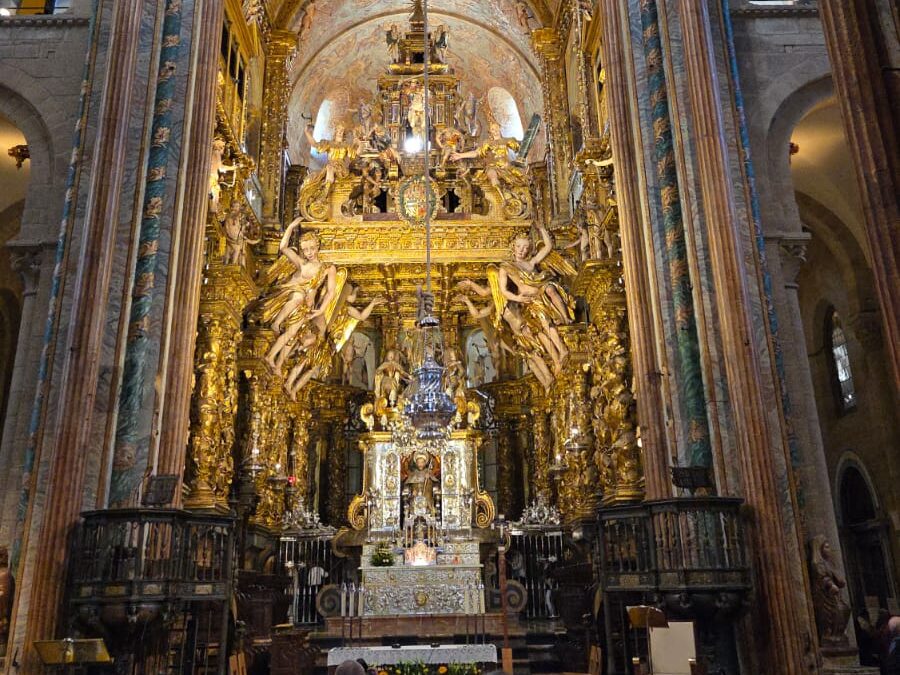
While the Cathedral of St. James is the magnet that draws millions, the city of Santiago is a masterpiece of urban planning that predates the modern concept of «walkability» by a thousand years. Eva Longoria, during her recent culinary and cultural exploration of Spain, noted the incredible «purity» of Santiago. It is a city that doesn’t try to be anything other than what it is: a place of refuge, study, and prayer.
When we guide you through Santiago, we look beyond the shadows of the Botafumeiro. We take you to the Mercado de Abastos, the second most visited site in the city. Here, you see the sustainable «zero-mile» economy in action. You’ll see local grandmothers selling turnip tops (grelos) alongside high-end chefs sourcing the morning’s catch. This is the heart of the city—a place where the city tradition of hospitality is served on a plate.
Local Insight: Don’t just look at the Cathedral; look at the granite beneath your feet. The stones of the Rúa do Vilar are worn smooth by centuries of pilgrims. In the rain, they reflect the yellow lights of the city like a mirror, a phenomenon locals call «the beauty of the wet stone.»
Lugo: Walking the Unbroken Circle
If you want to see a miracle of preservation, you must visit Lugo. It is home to the only Roman Wall in the world that remains entirely intact. While other Roman cities tore down their walls to expand, Lugo grew within and around its two-kilometer stone circle.
Walking the top of the wall is a rite of passage. It is 12 meters high and wide enough for two chariots—or, today, for locals to jog, push strollers, and find a moment of peace. From this vantage point, you can see the rooftops of the old city and the green valleys beyond. It is a powerful metaphor for sustainability: the Romans built this wall nearly 2,000 years ago, and it still serves a vital civic function today.
In our routes, we often point out how the wall protected the Cathedral of Santa Maria, which has the unique privilege of «Permanent Exposition of the Blessed Sacrament.» The history of faith and the history of the Empire are literally stacked one on top of the other here.
A Coruña: The City Where Light Meets History
A Coruña is often called the «Glass City» because of the galerías—enclosed glass balconies that allow the sun to warm the houses while keeping out the Atlantic wind. It is a city of incredible brightness and energy.
The crown jewel is the Tower of Hercules, the oldest working Roman lighthouse in existence. It has been a «beacon of hope» for sailors since the 1st century. But did you know that A Coruña was also the childhood home of Pablo Picasso? He lived here from age 9 to 13, and he often said the Atlantic light of Galicia influenced his early sketches.
We recommend a half-day stroll along the Paseo Marítimo, one of the longest in Europe. It connects the rugged cliffs of the lighthouse with the sophisticated plazas of the city center. It’s a perfect example of how a city can honor its maritime past while providing modern, healthy spaces for its citizens.
Pontevedra: The Global Model for the Future
For the an American traveler used to the noise of Manhattan or Los Angeles, Pontevedra is a shock to the system. This city is a world-renowned pioneer in sustainability. Since 1999, it has effectively banned cars from its historic center, turning the streets back over to the people.
It has won numerous international awards (including the UN-Habitat award) for its urban design. Walking through the Plaza de la Leña or the Plaza de la Herrería, you realize that the «silence» of a city is actually filled with the sounds of conversation, footsteps, and church bells. It is a place where «tapas culture» isn’t a tourist attraction—it’s a way of life. We’ll guide you to the small tabernas where the locals stand at the bar, sharing a bowl of pulpo á feira and a glass of Ribeiro, embodying the true spirit of community.
Small Treasures: Baiona and Betanzos
Sometimes the biggest stories are told in the smallest towns. At North West Incoming, we believe these «half-day» gems are essential for a complete Galician perspective.
- Baiona: This coastal fortress town was the first port in Europe to learn of the existence of America. When the Pinta docked here in 1493, the world changed forever. Walking the battlements of the Conde de Gondomar Castle (now a Parador), you can look out at the Cíes Islands and feel the weight of that historical moment.
- Betanzos: One of the seven ancient capitals of Galicia, Betanzos is a maze of medieval streets and «Gothic of the Sailors» churches. It is also the undisputed capital of the Spanish Omelet (Tortilla). Gordon Ramsay might appreciate the technical perfection required to make a Tortilla de Betanzos—it is notoriously runny, golden, and made with only the finest local potatoes and eggs.
Why «Granite Cities» Matter to You
As a guide, I have seen many travelers rush through Galicia, trying to check off the «Big Four» in two days. But at North West Incoming, we advocate for the «Local» approach. By spending a half-day in each city, you are contributing to a more sustainable form of tourism that doesn’t overwhelm the infrastructure but instead appreciates the craft of the people living there.
These cities are built of granite because granite lasts. It endures the rain, the sun, and the centuries. When you walk through these archways, you aren’t just a tourist; you are part of a lineage of travelers who have sought beauty and truth in the «finis terrae.»
Whether you are looking for the architectural majesty of the Roman Empire, the spiritual gravity of the Middle Ages, or the cutting-edge sustainability of a modern car-free city, Galicia’s «Granite Hearts» are waiting to beat for you.
Ready to walk the stones of history?
Would you like us to prepare a curated «City-Hopping» logistics plan that connects these four urban centers via the most scenic, sustainable routes?
No responses yet