For the
Christian pilgrim, the Camino de Santiago is not a hiking trip; it is a
«moving prayer.» Since our first Caminos in the last century, we have
seen the landscape of Spain change, but the profound spiritual gravity of
arriving in Santiago de Compostela remains.
Whether you
are walking to seek clarity, offer gratitude, or deepen your faith,
understanding the sacred rituals and the history of the Compostela
certificate is essential to your journey. At Northwest Incoming, we
believe that knowing the «why» behind the traditions makes the
«how» of the walk much more meaningful.
The
Credencial: Your Spiritual Passport
Before you
take your first step, you receive your Credencial (Pilgrim’s Passport).
This document is a direct link to the medieval tradition of «letters of
safe conduct» given to pilgrims.
As you
walk, you will collect sellos (stamps) from churches, cathedrals, and
the local establishments where you stop for a meal or a rest. These stamps are
more than just souvenirs; they are a legal and spiritual record of your
progress. To receive the official certificate in Santiago, the Cathedral
requires at least two stamps per day for the final 100 kilometers (62 miles).
What is
the Compostela?
The Compostela
is the official document, written in Latin, confirming that you have completed
the pilgrimage pietatis causa (for religious or spiritual reasons).
In the 90s,
the process of receiving this was a quiet, intimate affair. Today, while the
number of pilgrims has grown, the significance has not diminished. Entering the
Pilgrim’s Office in Santiago to present your weary feet and your stamped
passport is a moment of immense emotional release. It marks the transition from
«the one who searches» to «the one who has found.»
The
Pilgrim’s Mass and the Botafumeiro
The journey
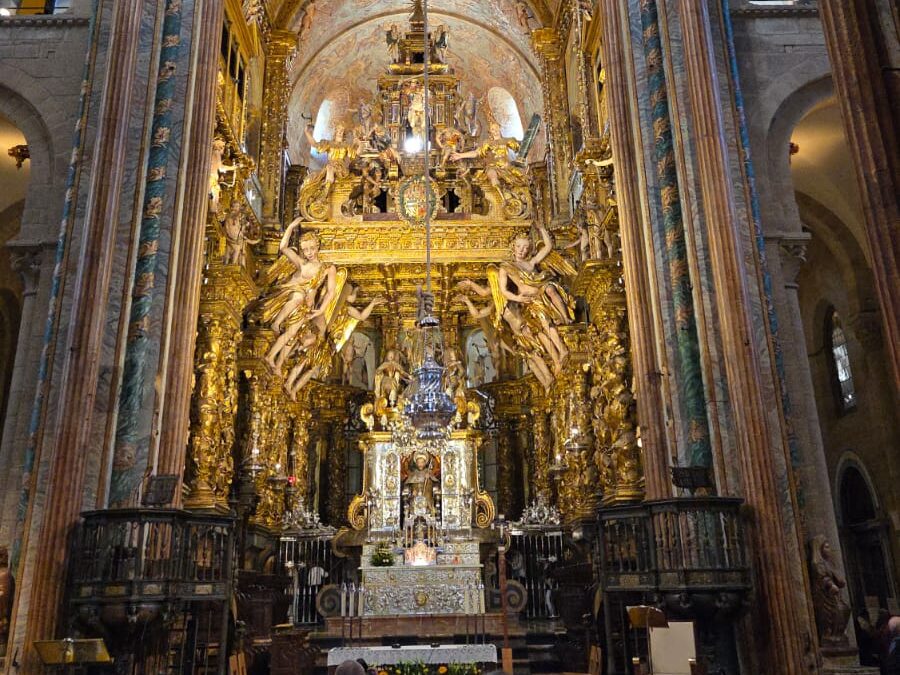
culminates at the Altar of Saint James. Attending the Pilgrim’s Mass is a
ritual shared by believers from every corner of the globe.
One of the
most awe-inspiring sights is the Botafumeiro, the giant silver thurible
that swings through the transept of the Cathedral. It was used in the Middle
Ages and still today serves as a powerful symbol of the prayers of the faithful
rising to heaven.
Note
from our team: The
Botafumeiro only swings on specific liturgical feast days or when requested in
advance. At Northwest Incoming, we can help our groups with their
request.
The
Rituals of Arrival
Beyond the
paperwork, there are ancestral gestures that connect you to millions of
Christians who came before you:
- The Embrace of the Saint: Following the path behind the
main altar, pilgrims climb a small staircase to embrace the silver statue
of Saint James, a gesture of friendship and gratitude.
- The Visit to the Crypt: Beneath the altar lies the
silver coffer containing the relics of the Apostle. This is the quietest,
most sacred heart of the Cathedral—a place for silent prayer and
reflection on the journey’s end.
Faith in
Action: Sustaining the Way
Spiritual
growth on the Camino is also found in how we treat the land and its people. For
us at Northxest Incoming, sustainability is an important value.
When you
choose to eat at a local family-run establishment or stay in a refurbished
traditional building, you are practicing Stewardship. You are ensuring
that the rural parishes and small villages—the very places that offer you
shelter and a stamp for your passport—can continue to thrive. A pilgrimage that
respects the local community is a pilgrimage that honors this.
A Legacy
of Guidance
Our experience
taught us that the final miles into Santiago can be overwhelming. The
transition from the silence of the woods to the bustling Praza do Obradoiro
requires a gentle hand. Our team is dedicated to ensuring that your arrival is
not a logistical headache, but a spiritual triumph.
Reflect
and Renew
The Compostela
is a piece of parchment, but the true certificate is written on your heart.
Are you
ready to begin your pilgrimage? Ask our team for a consultation on how to
integrate these sacred rituals into your custom itinerary. We are here to guide
your steps toward the Altar of St. James.
No responses yet